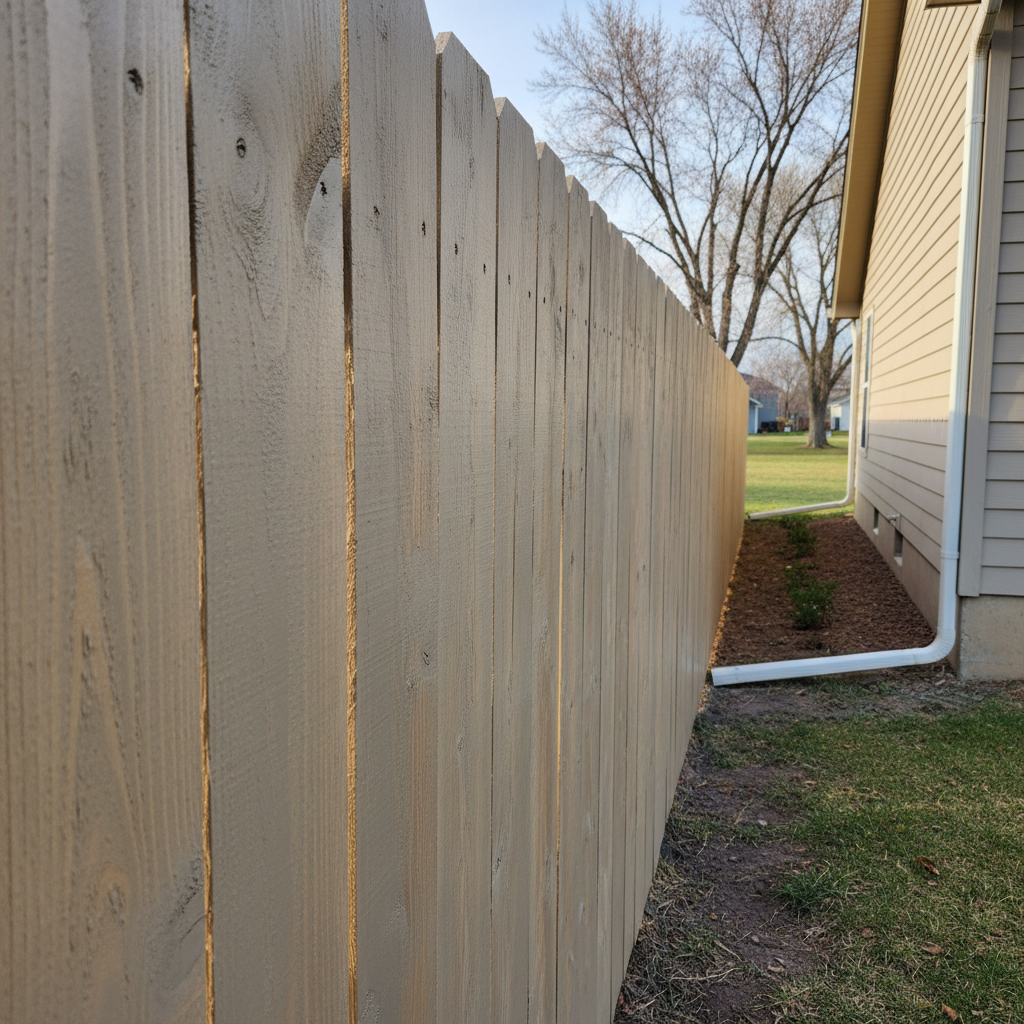
Do I really need to paint my fence? Can't I just leave it?
You can, but it's usually not a great idea, especially here in Fargo. Our weather is brutal on wood. Think about it: scorching summers, freezing winters, and that constant freeze-thaw cycle we get in spring and fall. Unprotected wood, whether it's cedar, pine, or spruce, will start to gray, crack, warp, and eventually rot. Paint or stain acts like a shield. It keeps moisture out, blocks UV rays, and deters pests. If you want your fence to last more than a few years and keep looking decent, you absolutely need to protect it.
What's the difference between paint and stain for a fence? Which one should I use?
This is a big one, and it really depends on what you're trying to achieve and how much maintenance you're willing to do. Paint forms a solid, opaque layer on top of the wood. It completely covers the wood grain, offers excellent UV protection, and typically lasts longer than stain – usually 5-10 years, sometimes more if it's applied well and maintained. You get a huge range of colors with paint, which is great if you want to match your house or make a statement.
Stain, on the other hand, penetrates the wood. There are different types: clear, semi-transparent, and solid. Clear and semi-transparent stains let the wood grain show through, which looks really natural and beautiful. They offer good UV protection but usually don't last as long as paint, maybe 2-5 years, and need reapplication more often. Solid stains are a bit of a hybrid; they're opaque like paint but still let some of the wood texture show. They last longer than semi-transparent stains but not quite as long as paint.
For most folks in Fargo, if you want maximum protection and don't mind not seeing the wood grain, a good quality exterior paint is often the way to go. If you love the natural look of wood and are okay with more frequent maintenance, then a semi-transparent or solid stain is a good choice.
How much prep work is actually involved before painting a fence? Can't I just power wash it and start painting?
I wish it were that simple, but no, you can't just power wash and paint. Prep work is probably 70% of the job, and it's what makes the paint job last. Here's what's usually involved:
- Cleaning: Yes, power washing is a good start to remove dirt, mildew, and loose old paint. But you might also need to scrub with a bleach-and-water solution for stubborn mildew.
- Scraping & Sanding: Any peeling or flaking old paint needs to be scraped off. Then, light sanding helps feather the edges and creates a good surface for the new paint to adhere to. Don't skip this, especially if you're dealing with an older fence.
- Repairs: Replace any rotted boards, tighten loose nails, and fix any broken sections. Painting over damaged wood is just a waste of time and money.
- Drying: You need to let the fence dry completely after washing – usually a few sunny days. Painting over damp wood is a recipe for peeling paint down the road.
- Priming: If you're painting bare wood or switching from a dark color to a light one, a good quality exterior primer is crucial. It helps the paint stick better and gives you a more uniform finish.
Seriously, shortcuts on prep will cost you more in the long run.
What kind of paint should I use for my fence? Does brand really matter?
Absolutely, brand and type matter a lot. Don't cheap out on fence paint, especially in our climate. You want a high-quality exterior acrylic latex paint. These paints are flexible, durable, and resist cracking, fading, and mildew better than oil-based paints these days. Look for paints specifically designed for exterior use, ideally with good UV protection and mildew resistance.
As for brands, I usually recommend professional-grade paints from companies like Sherwin-Williams or Benjamin Moore. They've got formulations built to withstand the kind of weather we get in Fargo. You'll pay a bit more upfront, but they'll last significantly longer and look better than the cheapest stuff you find at a big box store.
How long does a fence paint job typically last in Fargo?
With proper prep and good quality paint, you can expect a fence paint job to last anywhere from 5 to 10 years, sometimes even longer. Stains, as I mentioned, will need more frequent reapplication, usually every 2-5 years for semi-transparent and 3-7 for solid. The lifespan really depends on a few things: the quality of the paint, how well the prep was done, the type of wood, and how much direct sun and moisture the fence gets. A south-facing fence in an open yard will likely need attention sooner than a north-facing one shaded by trees.
Can I paint my fence myself, or should I hire a professional?
You can definitely paint your fence yourself if you're up for the work. It's not rocket science, but it is labor-intensive, especially the prep. You'll need to invest in brushes, rollers, a sprayer (if you're going that route), cleaning supplies, and your time. If you enjoy DIY projects and have the patience for the detailed prep work, go for it.
However, if you have a large fence, an older fence that needs a lot of repair, or you just don't have the time or desire to spend a weekend (or two) scraping and painting, hiring a professional like Fargo Painting Company is a smart move. We've got the right equipment, the experience to do the prep correctly, and we can get the job done efficiently and with a high-quality finish that will last. Plus, we know how to deal with the unique challenges of painting in the Red River Valley, like those clay soils that can kick up dust onto a freshly cleaned surface.
What about painting a fence that's already painted? Is that harder?
It can be a bit more challenging, yeah. If the old paint is in good shape, meaning it's not peeling or chalking badly, you might just need a thorough cleaning and a light sanding to scuff the surface for good adhesion. But if the old paint is failing – peeling, cracking, or flaking off in sheets – then you're looking at a lot more prep. You'll need to scrape off all the loose paint, sand down any rough edges, and potentially prime the bare spots. Sometimes, if the old paint is really bad, it might even be better to strip it completely, but that's a big job. The goal is always to have a sound, clean, and dull surface for the new paint to stick to, no matter what's underneath.
Should I use a brush, roller, or sprayer for painting my fence?
Each method has its pros and cons. A brush is great for detail work, getting into all the nooks and crannies, and for smaller fences. It gives you good control. Rollers are faster for flat, open sections of fence, but they won't get into all the gaps between boards or the rough texture of some wood. You'll often use a roller for the main surfaces and then a brush for the edges and hard-to-reach spots.
A sprayer is by far the fastest method for a large fence. It gives a very smooth, even finish and gets paint into every crevice. However, sprayers require more setup (masking off anything you don't want painted, like plants or your neighbor's garage), and there's a learning curve to avoid drips and overspray. You'll also typically back-brush or back-roll after spraying to ensure good adhesion and push the paint into the wood. For most DIYers, a combination of rolling and brushing is probably the most practical approach. For pros, sprayers are often the tool of choice for efficiency and finish quality.